British Horse Racing Industry Ramps Up for Bolder Protests Against Gambling Commission's Affordability Checks
Written by Sofia Vogel · Apr 10, 2026

British Horse Racing Industry Ramps Up for Bolder Protests Against Gambling Commission's Affordability Checks
The British horse racing industry, facing what leaders describe as an existential threat from the UK Gambling Commission's upcoming affordability checks, signals readiness for escalated direct action protests; these measures, set to roll out in phases through 2026, aim to curb problem gambling by scrutinizing bettors' spending limits based on income and financial data, yet industry figures warn they will slash betting turnover and the levy income that keeps tracks afloat and horses running.
Turns out, the tension boiled over in dramatic fashion back in early April 2026, when prominent landowner and racing enthusiast David Maxwell took to the courses in a stunt that grabbed headlines worldwide; during races at Wincanton and Taunton, Maxwell deliberately fell off his horses—once tumbling in full view of crowds and cameras—to spotlight the looming regulations, an act that earned him a three-day suspension from the British Horseracing Authority but amplified the campaign's message far beyond the paddocks.
From Quiet Lobbying to Trackside Drama
What started as polite pleas to policymakers has morphed into something far more visceral, with the Horse Race Betting Levy Board and trainers' groups now openly discussing tactics like mass walkouts or further theatrical disruptions; observers note how Maxwell's falls, executed with precision despite the risks (he walked away unscathed both times), captured the frustration of an industry reliant on gambling revenue, where levy contributions from bookmakers fund prize money, infrastructure, and welfare programs for some 15,000 racehorses across the UK.
But here's the thing: these checks aren't some vague proposal—they're locked in, with the Gambling Commission confirming frictionless checks for high rollers over £1,000 monthly losses starting later in 2026, followed by enhanced scrutiny for everyday punters; data from the Betting and Gaming Council underscores the stakes, revealing that horse racing derives about £100 million annually from the levy, a pot fueled directly by betting shop and online turnover that could drop by 10-20% under the new rules, according to industry modeling.
Experts who've crunched the numbers point out how affordability gates, requiring proof of disposable income before big bets, hit racing hardest among sports; unlike soccer or tennis where casual fans dip in sporadically, racing thrives on frequent, smaller stakes from dedicated followers, many of whom cluster around big festivals like Cheltenham or Ascot, events that pump billions into the economy but now face a squeeze as checks deter spontaneous wagers.
The Levy Lifeline Under Threat
At the heart of the uproar lies the betting levy, a mechanism since 1963 where bookies pay a percentage of their gross profits on British races—currently 10% offshore, 15% for onshore firms—straight into racing's coffers; research from the Betting and Gaming Council highlights how this funds not just races but veterinary care, training facilities, and even retirement for thoroughbreds, with figures showing a dip already from past regulatory tweaks that saw levy income flatline around £90-100 million yearly despite rising horse numbers.
What's interesting is the ripple effect: tracks like those in rural Britain, dependent on levy top-ups to cover operating costs, could shutter without it; one study by the National Trainers Federation warned of 20-30% revenue evaporation, forcing closures or scaled-back meetings, while jockeys and stable staff—thousands of jobs—brace for cuts, all because affordability checks slow the betting flow that powers the sport's engine.
And yet, the Commission pushes forward, citing evidence from trials where checks reduced risky spending by up to 40% among vulnerable groups; regulators argue the industry must adapt, perhaps by diversifying into media rights or sponsorships (like those from Qatar or Saudi interests in recent years), but racing leaders counter that such pivots take time, and time's what they don't have with checks imminent.
Key Players and Their Stands
David Maxwell emerges as the face of defiance, a Scottish landowner whose family estate hosts point-to-point races and who rode in his protest garb emblazoned with anti-checks slogans; those close to the scene recall how he planned the falls meticulously, consulting vets and stewards beforehand to minimize harm, turning personal risk into a viral symbol that lit up social media and news desks alike.
Others chime in too: the Racehorse Owners Association calls for unity, while trainers like Nicky Henderson (master of Cheltenham contenders) voice fears over prize money erosion; the Jockey Club, stewards of iconic venues like Newmarket, hints at joining protests if talks fail, with whispers of coordinated no-rides at summer fixtures or banners unfurled mid-race—actions that could halt meetings and cost bookies dearly in the process.
Even bookmakers, usually at odds with racing, align here; firms like Bet365 and William Hill, major levy payers, lobby alongside the sport, arguing checks will drive punters offshore to unregulated sites—a black market boom that evades levies entirely while exposing bettors to worse harms.
Protests in Motion: What's Brewing Next
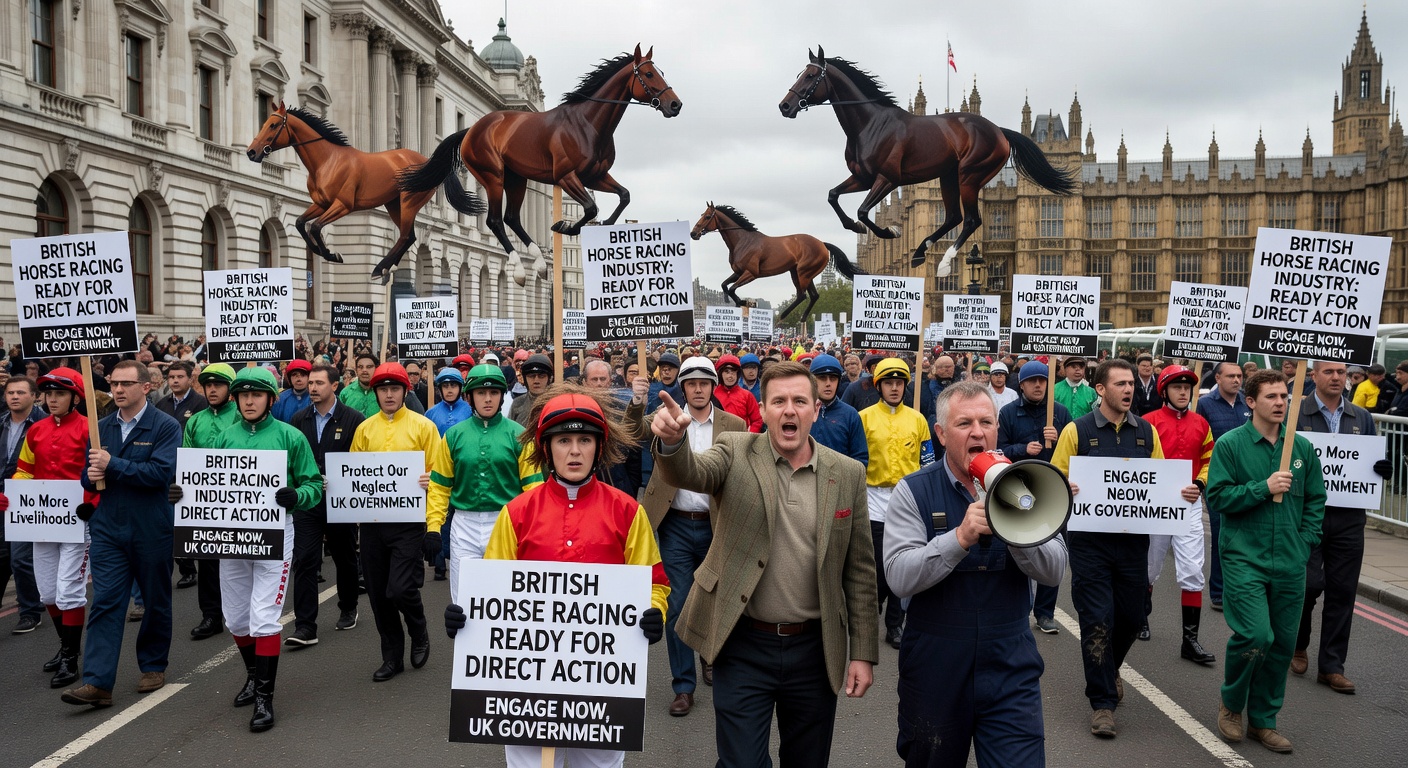
April 2026 marked the opener, but industry mouths speak of a crescendo; the Direct Action Campaign Against Affordability Checks (DAC), newly formed, rallies stakeholders for summer escalations—think rider boycotts at Royal Ascot or mass demos at Parliament, where MPs sympathetic to rural economies (many racecourses sit in key constituencies) might amplify the cry.
Figures reveal the urgency: a Guardian analysis of Commission consultations shows 80% of racing submissions begged for delays or dilutions, citing economic models predicting £500 million lost to the wider sector over five years; yet with Labour's government prioritizing gambler protection post-White Paper reforms, concessions seem slim, pushing protesters toward bolder strokes.
One case stands out: similar French protests in 2023, where jockeys slowed starts and vets "inspected" endlessly, forced a levy rethink; British figures eye that playbook, adapting it to tracks where a single disrupted card costs £250,000 in turnover, making every stunt a high-stakes gamble itself.
So now, as spring meetings wrap, eyes turn to June's big days; will Maxwell ride again, or will collectives like the National Trainers Federation orchestrate walkouts? The ball's squarely in the industry's court, and they're lacing up for the fight.
Broader Context and Levy Realities
Delving deeper, levy mechanics tie betting inextricably to racing's pulse; since offshore liberalization in 2019, gross profits have hovered at £650 million yearly for UK races, yielding that vital £100 million pot, but affordability tiers—£500 monthly without checks for low-risk profiles, scaling up with proof—threaten to throttle volume, especially among the 60% of punters who bet under £100 weekly.
Research indicates racing's unique vulnerability: data from HBLB annual reports show 70% of levy from shops and tracks, channels now pinched by online shifts and now these checks; observers who've tracked parallels in Australia note a 15% turnover plunge post-similar rules, with prize money slashed and fields thinned—scenarios UK stakeholders aim to dodge through spectacle.
It's noteworthy how protests blend passion with strategy; Maxwell's falls, far from reckless, drew 500,000 views online, pressuring the Commission amid its public backlash reviews, where industry voices dominate submissions.
Conclusion
The British horse racing world's pivot to direct protests underscores a levy-dependent ecosystem teetering on regulatory cliffs; with affordability checks barreling toward full enforcement in late 2026, David Maxwell's headline-grabbing tumbles signal just the start, as trainers, owners, and even bookies gear for disruptions that could reshape festivals and finances alike—yet data suggests adaptation hinges on levy reforms or betting habit shifts, leaving the sport's champions to race against time itself.
In the end, while the Gambling Commission holds firm on protecting punters, the industry's roar grows louder, proving that when the stakes involve tracks, thoroughbreds, and traditions centuries old, quiet compliance isn't on the table; watchers await summer's showdown, where falls—literal or figurative—might decide racing's next lap.