The Synchronization Challenge: Aligning App Onboarding, Funding Choices, and Assistance Availability for Live Sports and Gaming
Written by Sofia Vogel · May 31, 2026
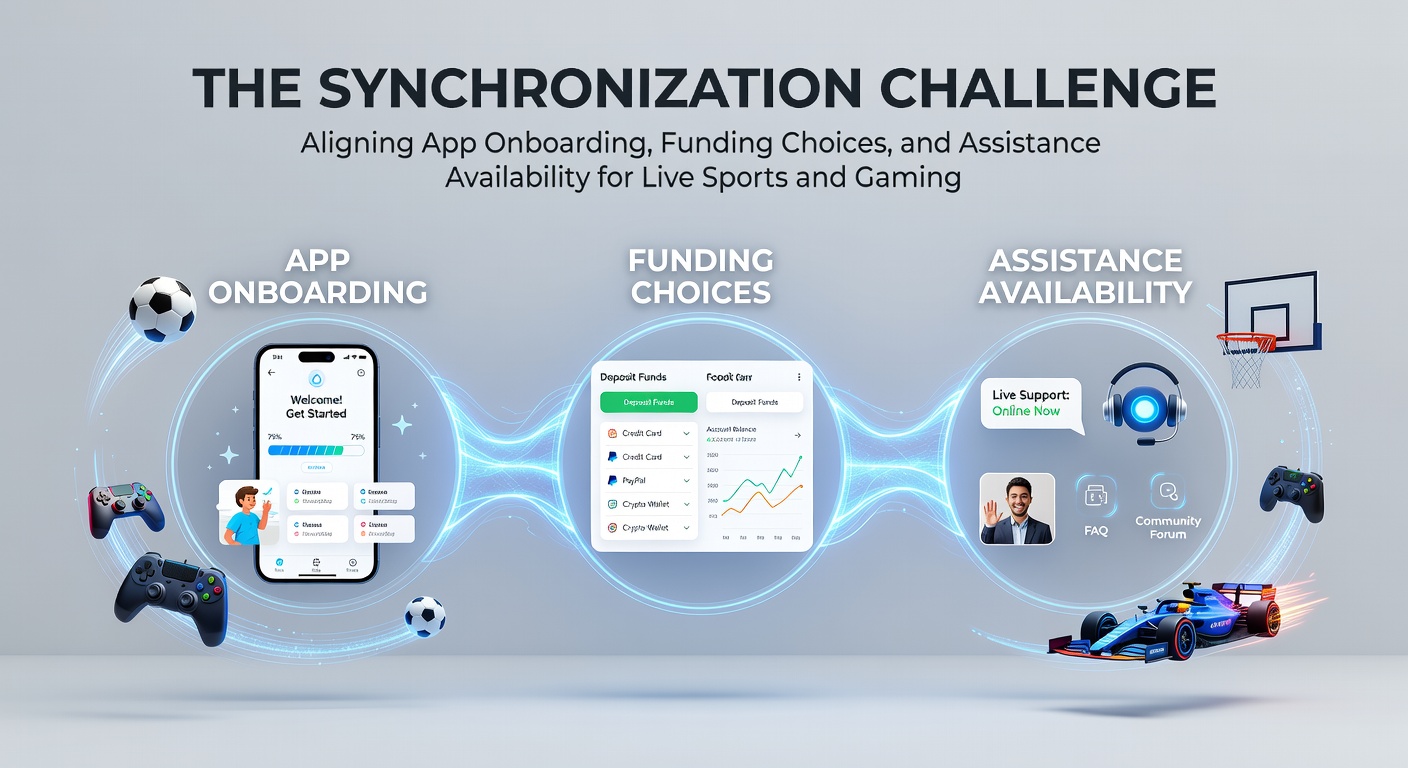
The Synchronization Challenge: Aligning App Onboarding, Funding Choices, and Assistance Availability for Live Sports and Gaming
App developers in the live sports and gaming sector face ongoing pressure to coordinate user onboarding, payment selections, and support resources into a single seamless flow, and this coordination becomes especially critical during high-stakes events such as major soccer matches, horse races, and live dealer sessions where timing directly affects participation rates.
Understanding the Core Components
Onboarding processes typically involve identity verification steps, account creation forms, and initial preference settings that must complete within seconds rather than minutes, while funding choices range from instant bank transfers and digital wallets to prepaid cards that require separate authentication layers, and assistance availability spans chat systems, email queues, and telephone lines that operate around the clock in multiple languages.
Researchers have documented that misalignment between these elements leads to drop-off rates exceeding 40 percent at key transition points, according to data compiled by the European Gaming and Betting Association.
Onboarding as the Entry Point
Modern applications integrate biometric checks and automated document scanning to reduce manual input, yet these tools still need to feed directly into payment gateways without requiring users to re-enter details, and observers note that successful platforms achieve this by embedding funding prompts inside the final onboarding screen so that account activation and first deposit occur as one continuous action.
In May 2026 several operators introduced unified verification protocols that draw from shared regulatory databases across European jurisdictions, which shortened average sign-up times from 4.2 minutes to under 90 seconds in pilot programs tracked by independent testing labs.
Funding Choices and Their Integration Demands
Payment options must appear contextually relevant to the user's location and event type, such as regional e-wallets prioritized for European soccer markets or cryptocurrency rails highlighted during certain North American racing schedules, while backend systems reconcile these selections with real-time balance updates that feed into live odds displays without lag.
Industry reports indicate that platforms synchronizing deposit confirmations with instant bonus eligibility see higher conversion from free users to active bettors, particularly when assistance agents receive simultaneous notifications of new funded accounts so they can intervene within the first sixty seconds if any verification flag appears.
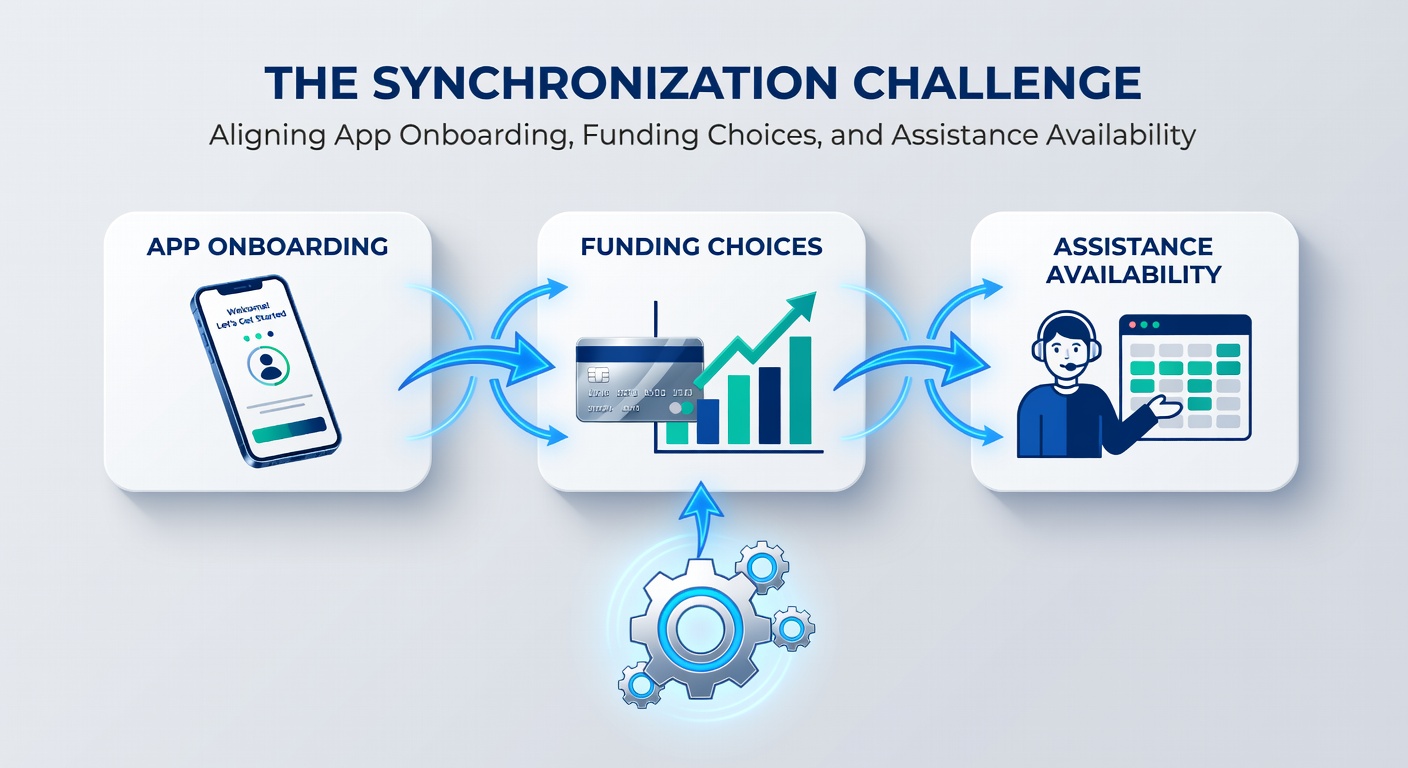
Assistance Availability as the Safety Net
Support teams rely on dashboards that pull data from both onboarding logs and transaction histories to deliver personalized guidance, and this requires robust data pipelines that update across all three domains simultaneously rather than through periodic batch transfers that create information gaps during peak live-event windows.
Studies conducted by academic groups affiliated with the University of Nevada, Reno have shown that integrated support systems reduce repeat contact volume by approximately 35 percent because agents already possess context about a user's verification status and recent deposit attempts before the conversation begins.
Technical and Regulatory Synchronization Issues
Developers encounter challenges when local regulations impose differing timelines for identity checks versus deposit approvals, which forces apps to maintain parallel workflows that users experience as friction, and these discrepancies become pronounced when events span multiple time zones or when cross-border users access the same platform.
Regulatory bodies such as the Nevada Gaming Control Board have issued guidance encouraging operators to adopt modular architectures that allow individual components to update without disrupting the overall user journey, a recommendation that several major providers began implementing in early 2026.
Case Examples from the Sector
One operator handling live dealer traffic across Asia and Europe redesigned its app so that account creation automatically generated a temporary funding token valid for 15 minutes, which then transitioned into full wallet access once support verified the initial transaction, and this change correlated with a measurable uptick in completed first bets during evening racing broadcasts.
Another platform serving North American sports markets linked its chat support directly to payment processor APIs, enabling agents to trigger instant refunds or adjustments without leaving the conversation window, and users reported fewer abandoned sessions as a result.
Future Developments Expected by Mid-2026
Emerging standards around open banking and digital identity promise further alignment opportunities, yet adoption depends on consistent implementation across payment providers and jurisdictional authorities, and those monitoring the space expect incremental rollouts rather than wholesale replacements of existing infrastructure through the remainder of the year.
Conclusion
The synchronization of onboarding, funding, and assistance functions remains a central operational priority for live sports and gaming applications, with measurable impacts on user retention and regulatory compliance when executed effectively, and continued refinement of these interconnected systems will likely define competitive positioning among operators through 2026 and beyond.